Timing Variations Across UK Betting Platforms Influence Accumulator Strategies in Football and Horse Racing
Mia Richter · Aug 22, 2026

Timing Variations Across UK Betting Platforms Influence Accumulator Strategies in Football and Horse Racing
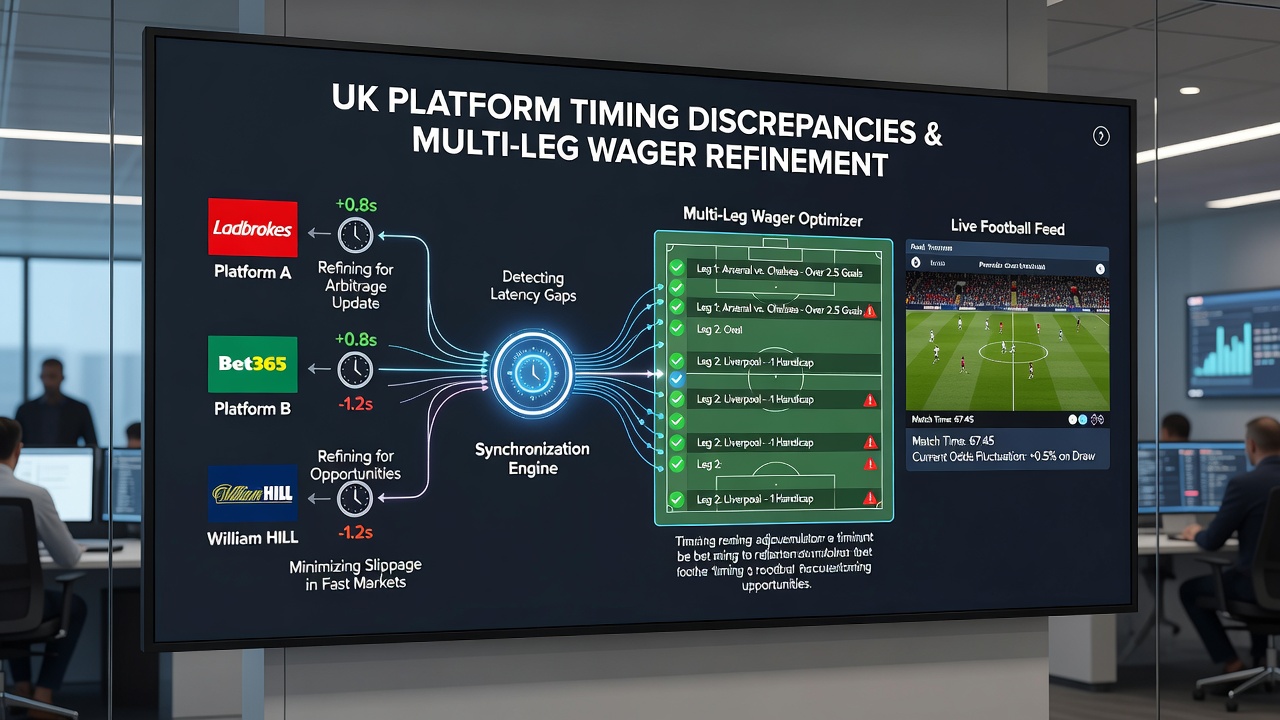
Timing discrepancies arise when different UK betting platforms receive and display live data feeds at slightly different moments, and these small gaps affect how bettors construct multi-leg wagers on football fixtures alongside equine events. Data from industry monitoring services shows that latency between the fastest and slowest platforms can range from under one second to several seconds during high-volume periods, which becomes relevant when an accumulator combines legs from separate sports or multiple events.
Data Feed Sources and Platform Refresh Rates
Most platforms pull information from shared third-party providers yet process and refresh that information on independent schedules, so one site may update a goalscorer price or a horse's live odds ahead of another. Researchers tracking these patterns through August 2026 noted that evening Premier League matches and major race meetings often produce the widest spreads in update times because trading teams on each platform react at different speeds to the same incoming data streams. Those who monitor multiple sites simultaneously record instances where a price moves on one platform seconds before the same movement appears elsewhere, creating brief windows for adjusting remaining legs of an accumulator.
Impact on Multi-Leg Construction
When constructing an accumulator that mixes football and horse racing selections, the order and timing of placement matters because later legs inherit the current market state at the moment each bet is confirmed. Observers who follow these sequences report that a price available for a late-afternoon race may have shifted by the time an earlier football leg settles, forcing bettors to decide whether to lock in the remaining selections on the original platform or seek a different site with fresher figures. Studies of live market behaviour indicate that platforms with faster refresh cycles tend to show tighter spreads during volatile periods, while slower platforms sometimes retain older prices longer, and this contrast directly influences the final payout structure of a multi-leg wager.
Real-World Examples from Recent Seasons
Take one documented case during a weekend double-header in which a Premier League match overlapped with a high-profile steeplechase card. Bettors who placed the football leg first on a platform with slower updates found that the horse-racing prices had already moved when they attempted to add the second leg elsewhere, whereas those who started with the racing selection captured more stable football prices before they adjusted. Figures released by European betting technology analysts reveal that such timing differences occur most frequently around 15:00 to 17:00 BST on Saturdays when multiple events run concurrently, and the effect compounds across accumulators containing four or more legs.
Tools and Techniques for Managing Timing Differences
Comparison services aggregate prices from numerous platforms and timestamp each update, allowing users to identify which sites currently display the most recent figures for a given selection. Bettors who employ these tools alongside mobile notifications can sequence their accumulator legs to account for known latency patterns, although success depends on consistent monitoring rather than any single platform advantage. Industry reports from the Australian Gambling Research Centre highlight that structured approaches to timing awareness produce measurable differences in accumulator completion rates when applied across mixed-sport bets, particularly when events from football and horse racing run in close succession.
Regulatory Context and Platform Standards
Regulatory frameworks in several jurisdictions require platforms to maintain fair and transparent pricing, yet they do not mandate identical refresh intervals across operators. The Malta Gaming Authority's technical standards, for instance, focus on system integrity and audit trails rather than mandating uniform data latency, which leaves room for the natural variation observed in the UK market. This environment means bettors who track timing discrepancies operate within existing rules while using publicly available comparison data to refine their multi-leg strategies.
Future Developments Expected by Late 2026
Technology suppliers continue to reduce average latency through improved API connections and edge computing, yet complete uniformity across platforms remains unlikely because each operator maintains its own risk-management protocols and trading teams. Data collected through mid-2026 suggests incremental improvements in refresh speeds, but the relative gaps between the quickest and slowest platforms persist during peak trading windows. Those who study these trends expect that accumulators combining football and equine events will continue to benefit from awareness of timing differences even as overall speeds increase.
Conclusion
Timing discrepancies across UK platforms stem from independent data processing and refresh cycles that create measurable differences in live prices for football and horse racing markets. These variations directly affect how multi-leg wagers are assembled and settled, particularly when selections from both sports appear in the same accumulator. Observers and analysts document consistent patterns tied to event schedules and platform infrastructure, and comparison tools provide one method for navigating the resulting opportunities. As technology evolves through 2026 and beyond, the core dynamics of timing awareness are expected to remain relevant for those constructing complex bets across these two popular categories.