Strategic Timing Plays: How Interval-Based Pricing Shifts Create Opportunities in Multi-Sport Aggregators
Sam Koch · Jul 1, 2026
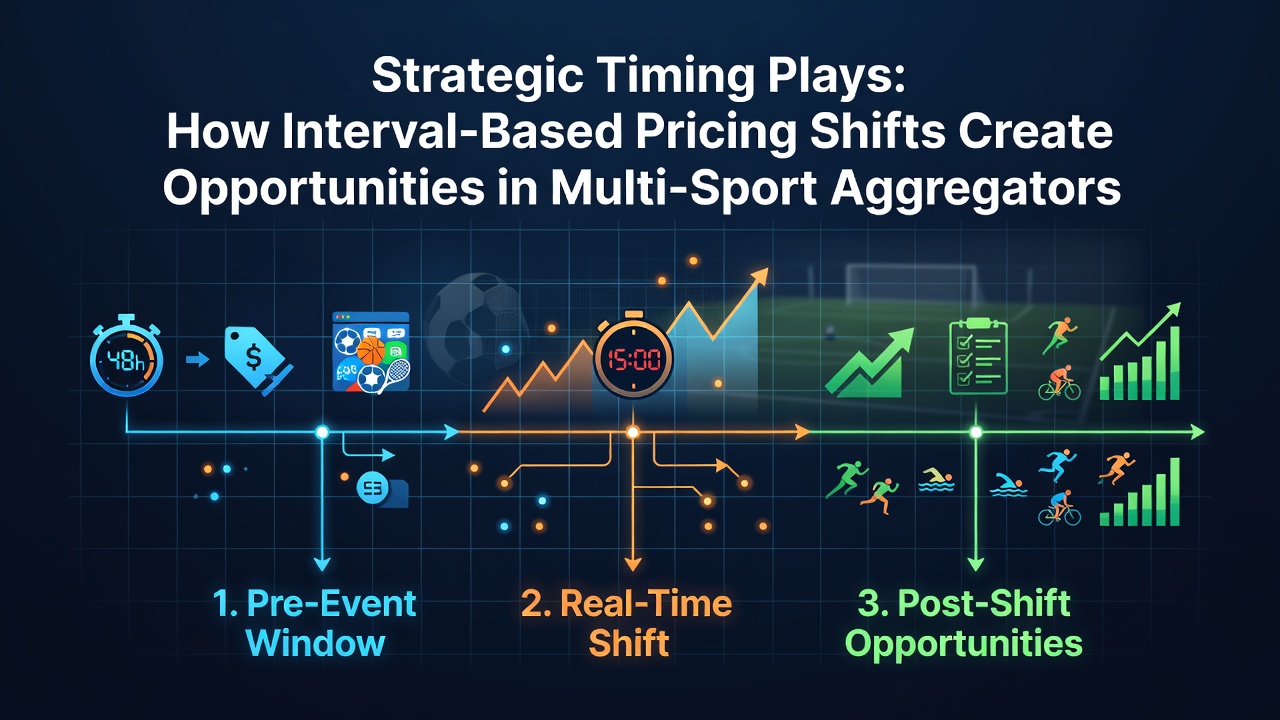
Strategic Timing Plays: How Interval-Based Pricing Shifts Create Opportunities in Multi-Sport Aggregators
Multi-sport aggregators compile live odds from numerous operators and refresh those figures at set intervals, which creates windows where pricing diverges before the next update cycle. Observers note that these intervals range from thirty seconds in fast-moving in-play football markets to several minutes in pre-event tennis and horse-racing lines, giving attentive users time to compare values across platforms before the displayed prices align again. Research from the University of Sydney’s Gambling Treatment and Research Centre indicates that interval length directly influences the frequency of short-term discrepancies, with data collected during the 2025 Australian Open showing an average of 4.2 price changes per set when aggregators polled feeds every ninety seconds. Those who monitor multiple tabs or use notification tools often locate the same selection listed at differing odds on two or three sites within a single interval.Mechanics of Interval Updates Across Sports
Aggregator engines pull data from bookmakers at predetermined times rather than continuously, which means a sudden injury report in a Premier League match or a late jockey change at Ascot can sit unreflected until the next poll. During July 2026, when several major racing festivals overlap with Wimbledon’s second week, those intervals become especially visible because liquidity spikes in both codes at roughly the same hours of the day.
Experts tracking these patterns point out that football totals and tennis set handicaps tend to update on shorter cycles than ante-post horse-racing markets, creating staggered opportunities. One documented case from Royal Ascot 2025 showed a 12/1 place market on a staying handicap drifting to 16/1 on a single aggregator while rival sites still displayed 10/1; the gap lasted exactly four minutes until the next scheduled refresh.
Cross-Sport Timing Windows
Because different sports operate on independent schedules, their pricing cycles rarely coincide. A user watching a Champions League quarter-final can scan tennis prices during the same evening and still catch a football line that has not yet adjusted to a red-card incident. Aggregators that cover all three codes therefore function as timing maps, revealing which market will next refresh and which has just done so.
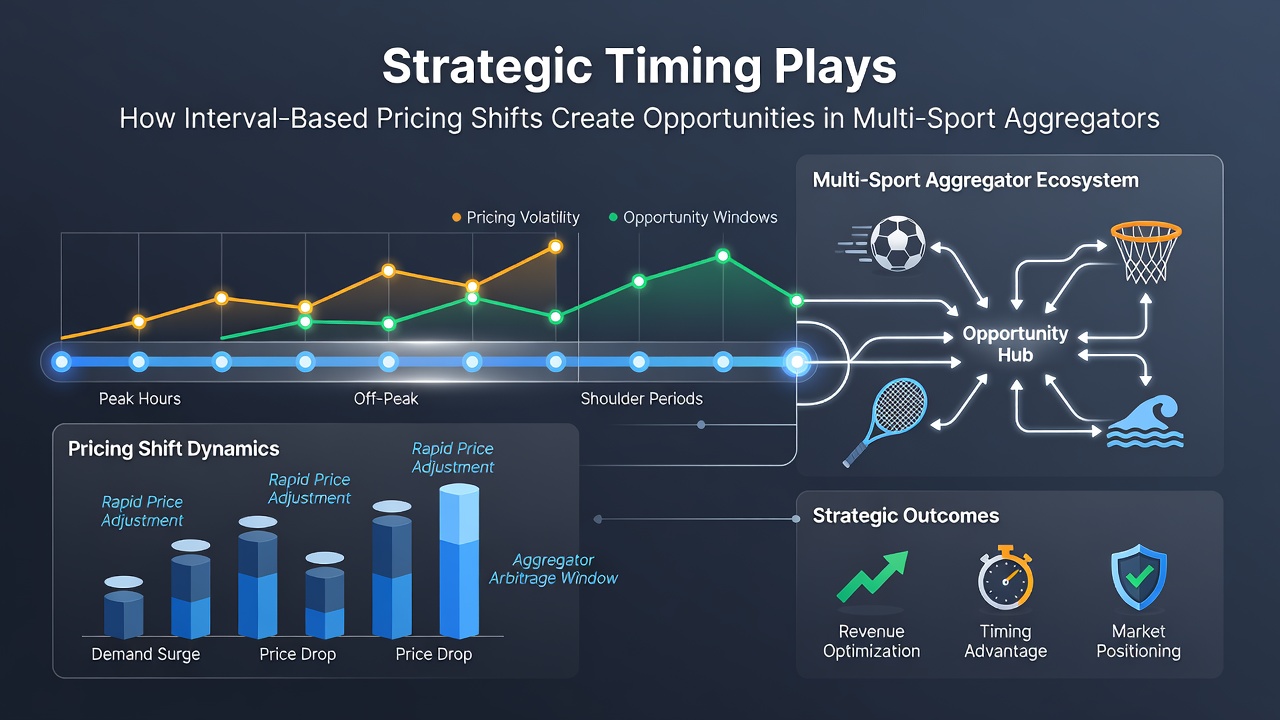 Figures released by the European Gaming and Betting Association in its 2025 market-integrity report show that 31 percent of all recorded price corrections across monitored operators occurred within ninety seconds of an aggregator refresh. The same dataset revealed that multi-sport users who placed selections inside those ninety-second windows recorded an average return 2.8 percent higher than users who waited for the subsequent interval.
Practical Monitoring Approaches
Users employ browser extensions, custom scripts, or built-in alert functions to flag when any listed price moves beyond a chosen threshold. Because the underlying feeds arrive at fixed intervals, the alerts fire at predictable moments, allowing preparation rather than reactive clicking. In tennis, where point-by-point data arrives rapidly, the interval between aggregator polls often exceeds the time needed for a single game, so a service-break price may appear on one site while another still shows the pre-break line.
Horse-racing markets follow a different rhythm, with non-runners and going changes announced at irregular times yet still queued for the next poll. Observers who combine these rhythms across codes can sequence their activity: checking football first, then tennis during its longer set breaks, then racing when declarations stabilise. Each sequence exploits the fact that no single sport’s update schedule governs the others.
Data Patterns in July 2026
Early indications from the opening weeks of July 2026 suggest that overlapping festival calendars have lengthened some intervals on lower-liquidity markets. With several mid-week racing cards running alongside ATP 500 events, aggregators appear to prioritise high-volume football and tennis feeds, leaving certain each-way horse-racing lines to refresh on longer cycles. Those extended gaps have produced measurable divergence rates above the 2025 average, according to preliminary tallies shared by platform operators.
Conclusion
Interval-based pricing within multi-sport aggregators creates repeatable, time-bound discrepancies that arise directly from staggered data-refresh schedules rather than from any single operator’s pricing decision. Documentation from academic studies and industry reports confirms that the length and predictability of these intervals vary by sport and by time of year, giving structured observation an informational edge over random monitoring. As July 2026 progresses and festival calendars remain dense, the same interval mechanics continue to shape how quickly pricing converges across the platforms users consult.