How UK Aggregators Reveal Timing Gaps in Football Injury Reports and Racing Inquiry Outcomes for Accumulator Strategies
Olivia Krause · Jul 29, 2026
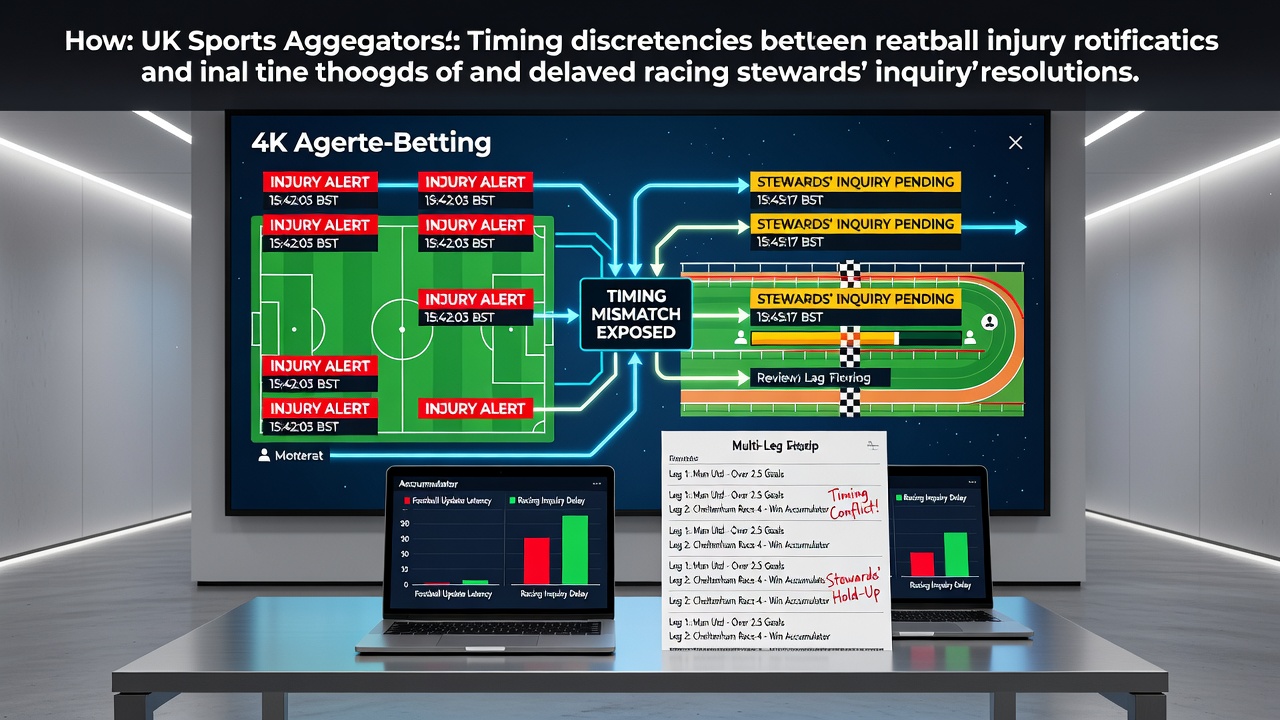
How UK Aggregators Reveal Timing Gaps in Football Injury Reports and Racing Inquiry Outcomes for Accumulator Strategies
UK betting aggregators pull live data streams from multiple bookmakers and present unified views of odds movements across football and horse racing markets. These platforms track how quickly injury confirmations reach punters compared with the release of stewards' decisions following races, and the differences often surface during the construction of multi-leg accumulators that combine both sports. Observers note that football injury updates frequently arrive through official club channels and league feeds while stewards' inquiries in racing proceed through separate regulatory timelines that can stretch minutes or even hours after a race concludes. Data from the 2025-2026 season shows accumulators involving Premier League matches and summer flat racing meetings commonly encounter these staggered information flows. Aggregators compile timestamps from official sources and bookmaker adjustments, allowing users to see when one leg of a bet reacts to fresh information before another leg does. Researchers at the University of Sydney's Gambling Research Unit documented similar patterns across international markets in a 2024 study that examined cross-sport timing discrepancies, finding average delays of 90 seconds in football updates versus up to four minutes for certain racing inquiries.Football Injury Notification Timelines
Premier League clubs issue injury reports through standardised channels that aggregators monitor in real time. When a key player suffers an issue during warm-ups or early in a match, the information reaches betting platforms at slightly different moments depending on each site's data supplier. Aggregators surface these small offsets by displaying side-by-side odds changes, so users can track which bookmakers have already adjusted their lines and which have not. In July 2026, several high-profile pre-season tournaments highlighted the same pattern as clubs prepared for the new campaign, with injury news from friendly matches moving through the system at varying speeds.
Racing Stewards' Inquiry Procedures
Stewards' inquiries at British racecourses follow a formal process that begins once the race result is declared. The panel reviews footage, hears from jockeys and trainers, and then announces any changes to the placings. Aggregators record the exact moment each bookmaker revises its results-based markets, revealing that some operators wait for the official stewards' bulletin while others act on preliminary indications. These differences become visible on multi-leg slips that include both the race outcome and a later football fixture, because the racing leg may remain unsettled while the football leg already reflects updated player availability.
How Aggregators Expose the Mismatches
Comparison tools combine timestamped feeds from the Football Association, individual racecourses, and multiple bookmaker APIs into single dashboards. When an injury report lands in one market but a stewards' decision remains pending in another, the aggregator highlights the divergence through colour-coded odds shifts and alert flags. Users therefore see which legs of an accumulator are still subject to revision and which have stabilised. One documented instance from the 2026 Royal Ascot meeting showed a stewards' inquiry lasting 11 minutes while a concurrent Premier League summer cup match injury update appeared within 45 seconds on several sites, creating a clear window visible only on aggregated displays.
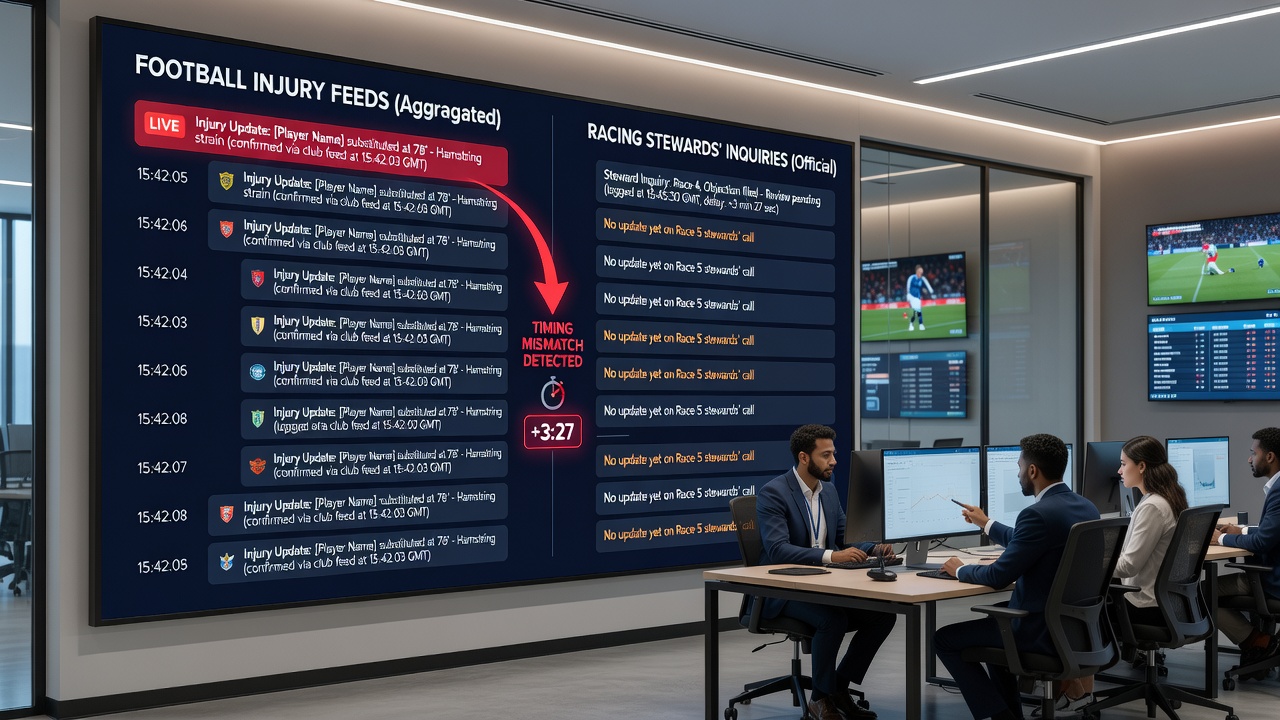
Effects on Multi-Leg Accumulator Construction
Build-ups that span football and racing require punters to monitor two distinct information ecosystems. Aggregators reduce the manual effort by presenting unified timelines, yet the underlying regulatory and operational differences remain. The Australian wagering authority's 2025 market integrity report noted that cross-sport products amplify the impact of any single delayed announcement because one unsettled leg can affect the entire ticket's status. UK platforms respond by offering live revision indicators that flag when a stewards' announcement or injury confirmation has not yet reached every bookmaker.
Industry organisations such as the European Gaming and Betting Association have published guidelines encouraging transparent data handling across different sports. These recommendations include standardised reporting windows for both medical updates and regulatory rulings, although implementation varies between operators. Aggregators therefore continue to serve as the primary mechanism through which timing differences become observable to users constructing multi-leg bets.
Conclusion
UK aggregators function as neutral data consolidators that record and display the precise moments when football injury information and racing stewards' decisions reach different bookmakers. By presenting these timestamps alongside live odds, the platforms make visible the staggered flow of official updates that affect accumulator pricing. The patterns observed during the 2025-2026 season, including events around July 2026 pre-season fixtures, illustrate how separate regulatory processes in each sport create measurable windows that only aggregated views can highlight consistently.