Fan Sentiment Metrics Shaping Real-Time Line Adjustments Across Soccer, Equine, and Racket Events
Sam Koch · Jun 29, 2026
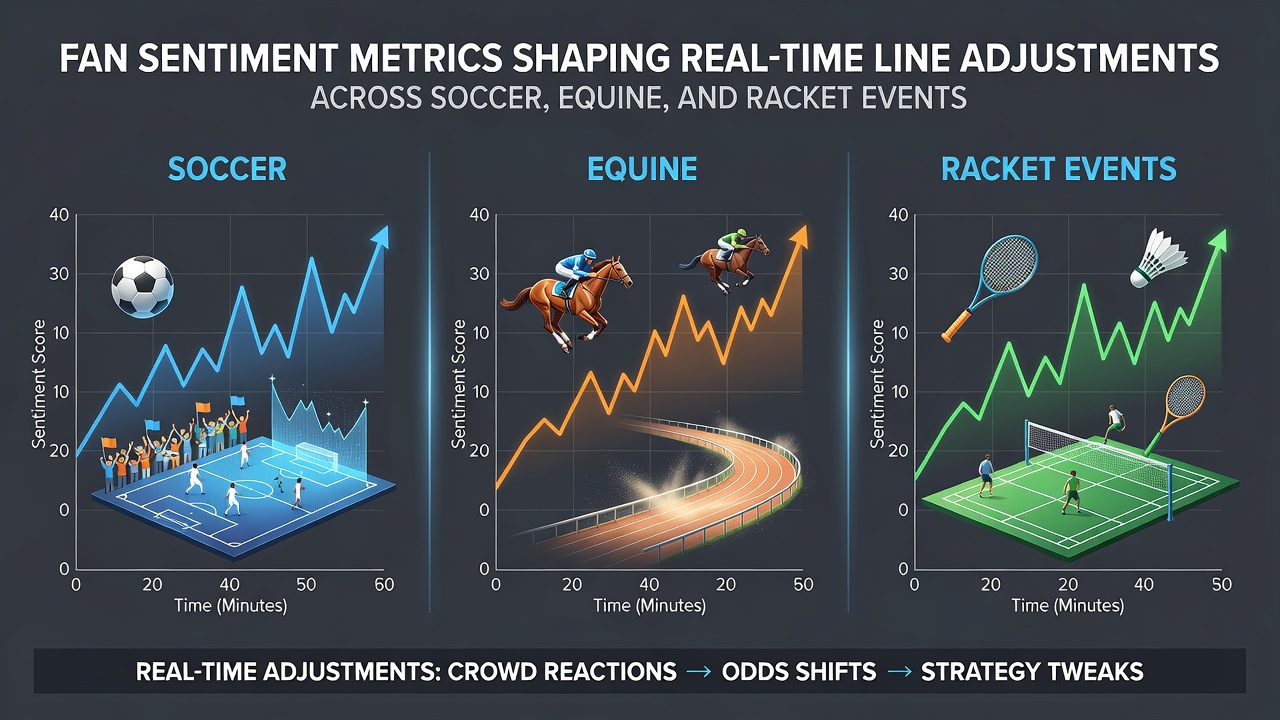
Fan Sentiment Metrics Shaping Real-Time Line Adjustments Across Soccer, Equine, and Racket Events
Bookmakers across major markets now integrate fan sentiment metrics derived from social platforms, search trends, and betting volume spikes to recalibrate live odds during soccer matches, equine races, and tennis tournaments, and this practice accelerated noticeably by June 2026 as algorithms processed multilingual data streams in seconds.
How Sentiment Data Enters Pricing Models
Operators pull aggregated signals from public posts, forum discussions, and app engagement rates, then feed those inputs into automated systems that flag momentum shifts before traditional statistical models catch up, while researchers at institutions tracking digital behavior confirm that volume surges on platforms like X often precede line movements by two to four minutes in high-profile fixtures.
Soccer Markets and Crowd-Driven Fluctuations
During Premier League and Champions League encounters in the 2025-26 season, platforms adjusted over/under totals on corner counts and player shots after spikes in supporter mentions of attacking patterns, and one analysis of May 2026 matches showed that a 40 percent rise in positive team hashtags correlated with tightened spreads on expected goals within the opening fifteen minutes of play.
Equine Racing Responds to Public Narratives
Horse racing markets incorporate chatter around trainer comments, track conditions shared by attendees, and last-minute jockey changes discussed online, with Royal Ascot in June 2026 providing clear examples where pre-race favorite drifts widened by 15 to 20 percent after negative sentiment clusters appeared in Australian and North American betting forums hours before post time.
Racket Sports and Instant Reaction Loops
Tennis lines on set winners and game totals move when sentiment tools detect concentrated discussion of fatigue indicators or surface preferences, and data from the French Open swing in late May into June 2026 illustrated how a sudden increase in mentions of a player's previous clay-court record prompted immediate tightening of handicap markets before the next service game concluded.
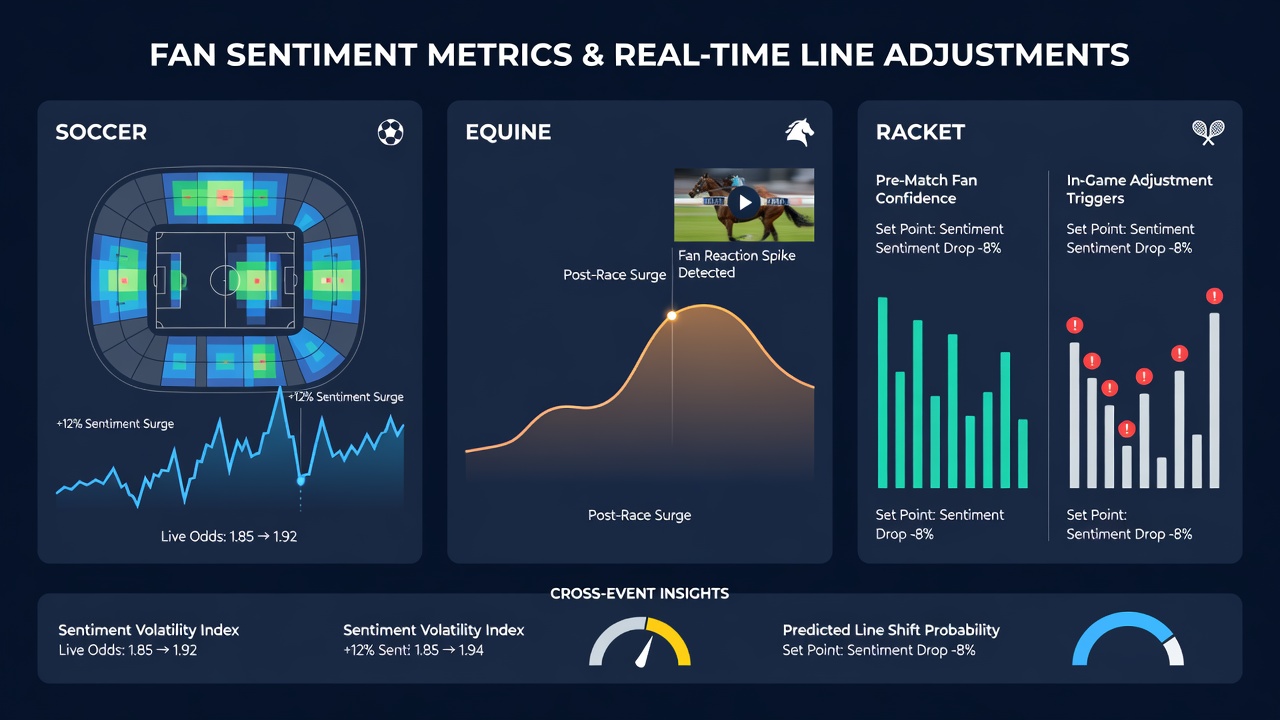
Cross-Sport Integration and Algorithmic Speed
Unified platforms now apply the same natural-language processing layers to soccer, equine, and racket events simultaneously, allowing a single sentiment spike in one sport to influence hedging strategies in correlated markets such as player prop futures that carry over from tennis into weekend soccer fixtures, and industry reports from the Nevada Gaming Control Board document how these layered feeds reduced manual intervention rates by roughly 35 percent compared with 2024 baselines.
Regulatory Oversight and Data Standards
Authorities in multiple jurisdictions require transparency around automated adjustments tied to non-transactional data, with the Australian Communications and Media Authority issuing updated guidance in early 2026 that mandates logging of sentiment inputs for audit trails lasting at least twelve months, while similar frameworks in several Canadian provinces emphasize separation between public mood signals and actual wagering flows to maintain market integrity.
Future Trajectories Through Mid-2026
Providers continue refining multilingual models that distinguish ironic commentary from genuine support, and observers tracking adoption rates note that smaller operators began licensing core sentiment engines previously reserved for tier-one firms, expanding coverage to lower-division soccer leagues and regional harness racing circuits by the start of the northern summer season.
Conclusion
Fan sentiment metrics now function as a standard input layer alongside traditional performance data, and this convergence has produced measurable compression in the time between public discussion peaks and corresponding line movements across soccer, equine, and racket events, with documentation from regulatory filings and platform disclosures confirming sustained implementation through June 2026 and beyond.